
Can Americans Buy Land in Ireland?
Yes. Ireland puts no nationality or residency restriction on buying land, so an American can buy a site, a field or a farm on the same footing as an Irish buyer. What changes the deal is not your passport. It is the 7.5% stamp duty on land, and whether the site can ever get planning permission.
Yes. There is no residency-based restriction on buying property in Ireland, and that includes land. An American can buy a building site, farmland or a house with acreage without living here and without any state consent. The consent that non-EU buyers of farmland once needed was repealed in 2005.
The costs and the risks sit elsewhere. Revenue treats a site or a field as non-residential property, so stamp duty is 7.5% rather than the 1% you would pay on a home. And owning a site gives you no right to build on it. That is a planning decision for the county council, and in some rural areas it depends on having a local connection.
Buying land in Ireland, at a glance
- Can an American legally buy?
- Yes. No nationality or residency restriction applies
- Stamp duty on a site or farmland
- 7.5% The non-residential rate, charged on the price
- If you build a home on it
- Up to eleven-fifteenths of that duty can be refunded, within strict time limits
- Can you build on it?
- Only with planning permission. Some rural areas apply local-need rules
- Does owning land give residency?
- No. Immigration permission is a separate matter
Sources listed in full below. Last checked 28 September 2026.
Can Americans buy land in Ireland? Yes, and no consent is needed
Irish law does not ask where a buyer comes from. Citizens Information says there is no residency-based restriction when you buy a property in Ireland, and that applies to a building site or a farm as much as to a house. You pay the same stamp duty as an Irish buyer of the same property.
Older guides still mention a consent that non-EU buyers needed before acquiring agricultural land. That was section 45 of the Land Act 1965. It was repealed by the Land Act 2005, and the Law Society confirmed the repeal took effect from 4 November 2005. Anything telling you that an American needs permission to buy Irish farmland is out of date.
What land ownership does not do is change your immigration position. Owning a site or a farm gives you no right to live in Ireland. If you plan to build and move here, the property question and the permission question run separately, and our guides to retiring in Ireland from the USA and moving to Ireland from the USA cover the other half.
Your passport does not decide whether you can buy land here. The planning file does.
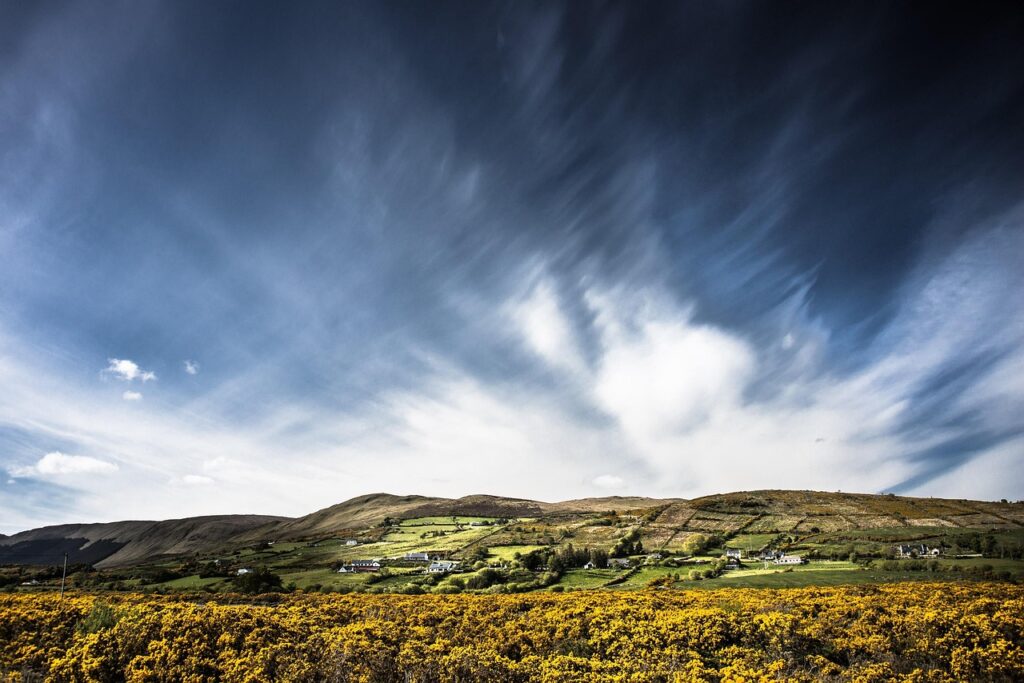
Stamp duty on land in Ireland: 7.5%, not 1%
This is the figure that surprises buyers most. Revenue classes agricultural land, non-agricultural land and building sites as non-residential property, and the non-residential rate is 7.5% of the price. A home, by contrast, is charged at 1% on the first €1 million. On a €150,000 site that is €11,250 in stamp duty, where a home at the same price would cost €1,500.
Planning permission does not change the answer. Revenue states that permission to build a house does not make a site residential property. Three situations do change it, and they are worth knowing before you agree a price.
| What you buy | Stamp duty treatment |
|---|---|
| A building site on its own | Non-residential: 7.5% of the price, whether or not it has planning permission |
| Farmland or a field | Non-residential: 7.5% of the price |
| A site bought with a connected agreement to build a house on it | Residential rates, charged on the site cost plus the building cost, excluding VAT |
| A derelict house with its site | Residential property, so residential rates apply |
| A house with more than one acre of land | Mixed: the house and up to one acre at residential rates, the rest at 7.5% |
Source: Revenue, Residential property, Non-residential property and Mixed use property. A connected agreement means you cannot have the site transferred to you without the house being built. Checked 28 September 2026.
The derelict cottage route
Because Revenue treats a derelict house as residential property, buying a ruin with its site is charged at residential rates rather than 7.5%. You will need its Local Property Tax property ID to file the stamp duty return. Whether you can then restore or replace the building is, again, a question for the planning office.
For stamp duty on a finished home, including new builds, use our Ireland stamp duty calculator.
The stamp duty refund when you build a home
This is a refund, not a lower rate. You pay the full 7.5% on closing and claim once building work has started, so budget for the whole amount first.
If you buy a site at the non-residential rate and build a home on it, the Residential Development Stamp Duty Refund Scheme can return most of the difference. It applies to a single house as well as to larger developments. The maximum refund is eleven-fifteenths of the stamp duty you paid at 7.5%, which leaves you having paid the equivalent of 2%.
The conditions are strict, and the clock starts on the day the site transfers to you.
- Bought on or after 11 October 2017, with stamp duty paid in full at the non-residential rate.
- Building starts within 30 months of the date the land transferred to you, under a Commencement Notice the council has acknowledged as valid. Work started before that acknowledgement does not count.
- Building finishes within 30 months of that acknowledgement. For a single house you can opt out of council certification, in which case completion is the date of the electrical completion certificate.
- Only the house and up to one acre around it qualify. The refund is worked out on the area covered by the Commencement Notice, so a bigger site gets a proportionate refund.
- Claims go through Revenue online within four years of the Commencement Notice being acknowledged. The refund is clawed back if the house is not finished in time.
Revenue’s own worked example: a site bought for €100,000 carries €7,500 in stamp duty. Once building starts, with the whole site covered by the Commencement Notice, the refund is €5,500, so the net duty is €2,000. The scheme was due to end in 2025. Finance Act 2025 extended it to 31 December 2030.
Site stamp duty estimator
Enter the price of a site or a piece of land. It works out the duty at 7.5%, the Land Registry fee and the most the refund could return if you build a home on it.
- Land Registry fee, transferIf the land is already registered€0
- Most the refund could returnEleven-fifteenths of the duty, scaled by area€0
- Net stamp duty after the refund€0
- The same price as a home, for comparisonResidential rates of 1%, 2% and 6%€0
An estimate from the rates stated on this page, not a quote and not tax advice. Your solicitor calculates the stamp duty and Revenue decides any refund. Nothing you enter is stored or sent anywhere.
Planning permission: can you actually build on it?
Owning a site and being allowed to build a house on it are separate questions, and the second one decides what the land is worth to you. You need planning permission from the local council to build a house, and the council measures every application against its development plan, which sets out what each area is zoned for.
In some rural areas the council will only allow a new home if you have an association with the area, usually called local need. The rules are set county by county, so a buyer with no connection to an area may not qualify where a local family would. Ask the planning section of the council, or book a pre-planning meeting, before you commit to a price.
The council will also want to know how the house will deal with waste water. Where there is no public sewer, a planning application for a new house has to show the site suits the proposed treatment system under the EPA’s 2021 Code of Practice, which means a qualified site assessor testing the ground. Making or widening an entrance onto a public road needs planning permission too.
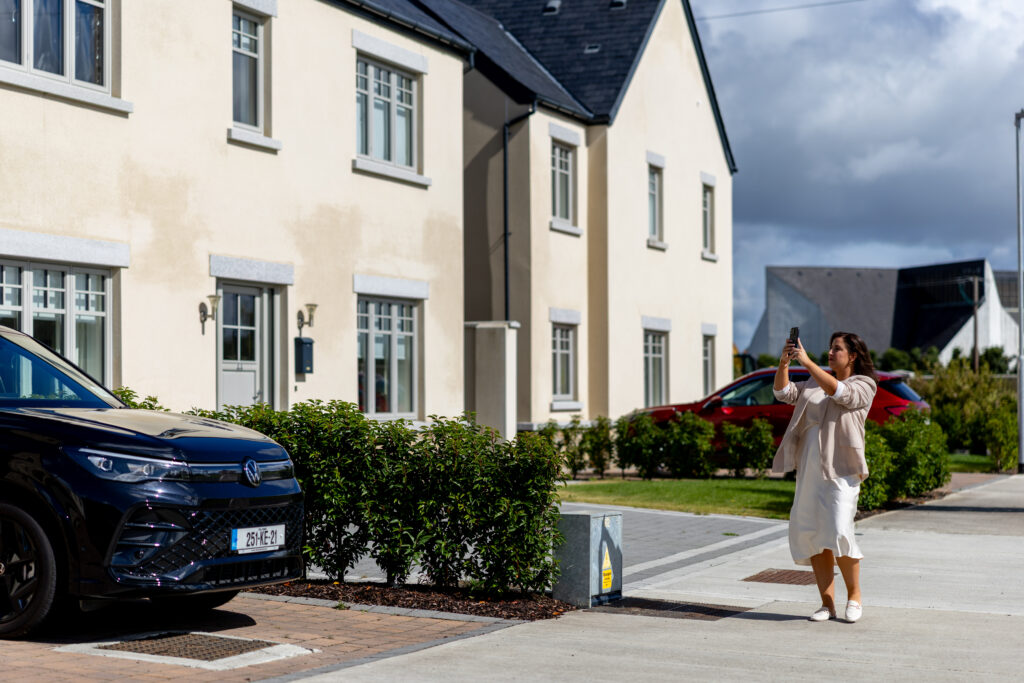
How long planning permission takes, and how long it lasts
These are the standard figures for an application to build a house. Allow longer in practice if the council asks for further information or a decision is appealed.
| Stage | Figure |
|---|---|
| Application fee to build a house | €65 |
| Site notice stays up for at least | 5 weeks |
| Public can comment for | 5 weeks |
| Council decision due within | 8 weeks |
| Time to appeal a refusal | 4 weeks |
| Full permission lasts | 5 years |
| Outline permission lasts | 3 years |
Source: Citizens Information, Planning permission for building a house. Appeals go to An Coimisiún Pleanála. Checked 28 September 2026.
A buyer’s agent cannot promise a planning outcome, and nobody honest will. What we can do is make sure the questions are asked before the money is committed. Our buyer’s agent service works only for the buyer, from the first brief through to completion.
Buying a house with land in Ireland: how the price is split
A farmhouse or cottage with acreage is charged in two parts. Revenue treats the house and up to one acre of garden, yard and driveway as residential property. Anything beyond that acre is non-residential and is charged at 7.5%. You apportion the price between the two, and Revenue expects you to keep a record, such as a valuation, showing how you reached the split.
Revenue’s own example is a house on three acres where the house and its garden take up 0.4 acres. The 0.4 acres is residential property and the other 2.6 acres is non-residential.
Zoned land can carry an annual tax
If the land is zoned for housing and serviced, check the council’s Residential Zoned Land Tax map before you buy. Land on that map, other than an existing home that pays Local Property Tax, is liable to an annual tax of 3% of its market value, assessed on 1 February each year. If you plan to hold a zoned site for some years before building, factor it in.
Buying a second home rather than land? Our guide to buying a second home in Ireland covers the running costs of a house.
How to buy land in Ireland as an American: eight checks
Tick them off as you go. Nothing is saved or sent anywhere, and the list clears when you leave the page.
0 of 8 checked
Where every statement comes from
Tax rules and planning policy change. If you find something out of date, please tell us and we will correct it.
| What we state | Primary source |
|---|---|
| There is no residency-based restriction when you buy property in Ireland. | Citizens Information, Steps involved in buying a home. Checked 28 September 2026. |
| Section 45 of the Land Act 1965 (consent for non-qualified persons to acquire agricultural land) was repealed by section 12 of the Land Act 2005, operational from 4 November 2005. | Land Act 2005, section 12; Law Society of Ireland practice note. Checked 28 September 2026. |
| Agricultural land, non-agricultural land and sites are non-residential property. Planning permission does not make a site residential. A site with a connected building agreement, and a derelict house, are residential. | Revenue, Non-residential property; Revenue, Residential property. Checked 28 September 2026. |
| Non-residential stamp duty is 7.5%. Residential stamp duty is 1% up to €1 million, 2% to €1.5 million and 6% above that. | Revenue, Stamp Duty and property: Rates. Checked 28 September 2026. |
| Curtilage up to one acre is residential and the excess is non-residential. Mixed use property is apportioned and a record kept. The three-acre example. | Revenue, Residential property; Revenue, Mixed use property. Checked 28 September 2026. |
| Refund of up to eleven-fifteenths of 7.5% duty for a single dwelling built on non-residential land; the qualifying conditions, 30-month time limits, one-acre limit, four-year claim window and the €100,000 worked example. | Revenue, Residential Development Stamp Duty Refund Scheme, with its qualifying conditions, building work, maximum claim and when to claim pages. Checked 28 September 2026. |
| Finance Act 2025 extended the refund scheme from 31 December 2025 to 31 December 2030. | Revenue eBrief No. 073/26. Checked 28 September 2026. |
| Planning permission is needed to build a house; local-need rules in certain rural areas; the fee, notice and decision periods, and how long permission lasts. | Citizens Information, Planning permission for building a house; Development plans. Checked 28 September 2026. |
| A planning application for a new house must show the site suits the proposed waste water system under the 2021 Code of Practice. | Environmental Protection Agency, Septic tanks. Checked 28 September 2026. |
| The Land Register and its maps are public and searchable on landdirect.ie. Unregistered property bought after 1 June 2011 must be registered for the first time. | Tailte Éireann, Property registration; First registration. Checked 28 September 2026. |
| Land Registry fee on a transfer on sale: €400 up to €50,000; €600 to €200,000; €700 to €400,000; €800 above. | Tailte Éireann, Schedule of fees (S.I. No. 380 of 2012), Item 1. Checked 28 September 2026. |
| Residential Zoned Land Tax is 3% of market value, with a liability date of 1 February; existing homes subject to Local Property Tax are excluded. Local Property Tax is charged on residential properties. | Revenue, RZLT liability; Revenue, Local Property Tax. Checked 28 September 2026. |
| Your solicitor must give you a written notice of their legal costs. | Legal Services Regulation Act 2015, section 150. Checked 28 September 2026. |
Planning decisions are made by each council against its own development plan, so we do not quote any county’s local-need criteria. Confirm them with the planning section before you buy.
Important, please read
This is general information, not advice. This page explains how buying land in Ireland works for an overseas buyer. It is not legal, planning, tax, financial or immigration advice. Alanna Hughes Property is a licensed buyer’s agent. We are not solicitors, planning consultants, tax advisers, immigration advisers or mortgage brokers, and nothing here should be relied on in place of advice from one.
Planning is decided locally. Whether a house can be built on any site is a decision for the local council, and on appeal An Coimisiún Pleanála. Nothing here indicates that permission would be granted on any particular site.
Tax rules change. Stamp duty rates and the refund scheme are set by the Oireachtas and administered by Revenue, and can change in any Budget. Your solicitor calculates the duty on your purchase, and Revenue decides any refund.
Property ownership does not confer residency. Buying land or a home in Ireland does not grant a visa, residency or citizenship.
Alanna Hughes Property Limited is a licensed property services provider regulated by the Property Services Regulatory Authority. PSRA Licence No. 004850. Content last reviewed 28 September 2026.
Frequently asked questions
Can an American buy land in Ireland?
Can foreigners buy land in Ireland?
Can Americans own farmland in Ireland?
How much is stamp duty on land in Ireland?
Does planning permission make a site residential for stamp duty?
Can I build a house on land I buy in Ireland?
Is there an annual tax on land in Ireland?
Does buying land in Ireland give me residency?
Related guides from AH Property
Moving from the USA
The full guide for Americans buying a home in Ireland.
Read GuideBuyer’s agent service
How we act for buyers only, from brief to completion.
View ServiceStamp duty calculator
Stamp duty and the full cost of buying a home.
Open CalculatorRetiring from the USA
What Stamp 0 means if you plan to live here.
Read GuideBuying a second home
What to know before buying a second home in Ireland.
Read GuideWhy use a buyer’s agent
What representation on your side actually changes.
Read GuideLooking at land or a rural home in Ireland?
We represent buyers only, never sellers. Tell us what you want to buy or build, and where, and we will talk you through what is realistic before you spend money on a site.